Most busy professionals understand what healthy living should look like in theory. Eat well, stay active, get enough sleep, and manage stress. In practice, however, long workdays, constant responsibilities, and packed schedules often push wellness aside. Over time, that trade-off can quietly erode focus, resilience, and overall performance.
Large prospective studies and meta-analyses suggest that chronic work stress, including job strain and effort–reward imbalance, is associated with a higher risk of cardiovascular disease and adverse metabolic outcomes. These associations do not mean that stress alone causes disease. They do, however, highlight how sustained pressure, combined with disrupted sleep and limited opportunities for recovery, can influence long-term health.
The encouraging reality is that protecting your health does not require a complete lifestyle overhaul. The most effective strategies tend to be practical, repeatable habits that fit into real schedules and compound over time.
Why Executive Health Often Takes a Backseat (And Why It Matters)
For many professionals, work demands consistently override personal health priorities. Tight schedules leave little room for regular meals, movement, or restorative rest. High-responsibility roles also carry sustained cognitive and emotional load, which can keep the nervous system in a prolonged state of activation.
Work stress and cardiovascular risk
Large individual-participant meta-analyses have found that job strain, defined as high demands combined with low control, is associated with a modestly higher risk of coronary heart disease. More recent prospective data suggest that risk may be higher when multiple work stressors are present, such as the combination of job strain and effort–reward imbalance.
It is worth noting that some of the strongest associations have been observed in male-dominant cohorts. Findings in women have been more variable, and ongoing research continues to refine these estimates.
Metabolic health and chronic stress
Systematic reviews and meta-analyses also link psychological stress to higher odds of metabolic syndrome. Work-related psychosocial factors, including job strain and shift work, appear to contribute to this risk. Several biological and behavioral pathways are likely involved, including disrupted sleep, altered autonomic and hormonal signaling, changes in activity patterns, and downstream effects on glucose regulation and inflammation.
Without intentional intervention, early warning signs such as reduced sleep quality, weight changes, persistent fatigue, and difficulty concentrating are often normalized until they begin to interfere with work performance or quality of life.
Five Daily Health Habits Busy Professionals Can Actually Maintain
Health outcomes are shaped far more by consistency than by occasional dramatic changes. For busy professionals, the goal is not perfection but sustainable habits that can be repeated even during demanding weeks.
1. Build breakfasts around protein and fiber
Health outcomes are shaped far more by consistency than by occasional dramatic changes. For busy professionals, the goal is not perfection but sustainable habits that can be repeated even during demanding weeks.
Simple, repeatable options
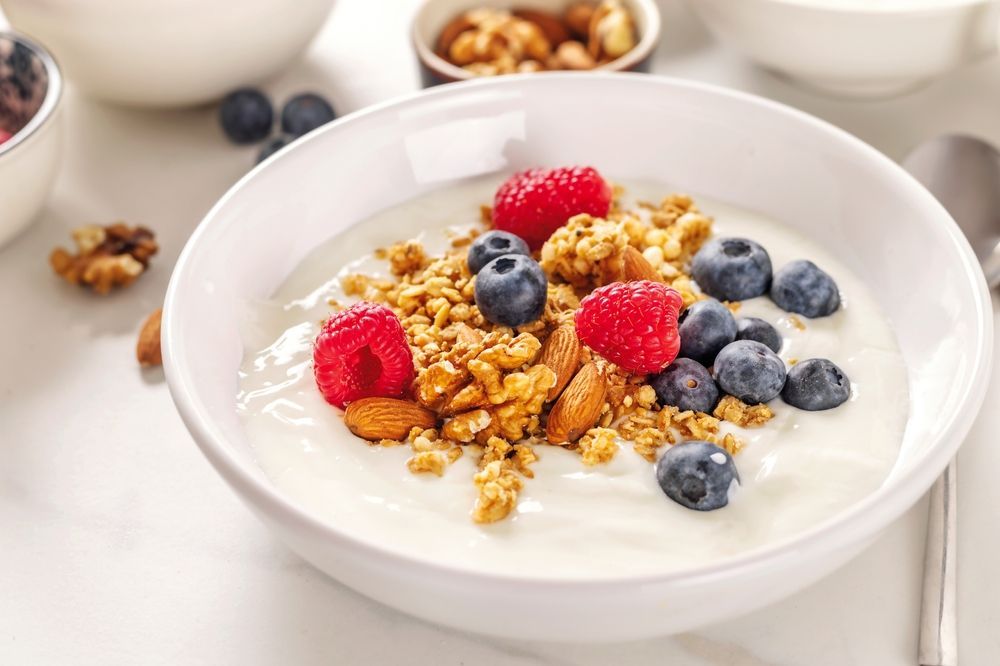
- Greek yogurt with berries and nuts
- Eggs with whole-grain toast and avocado
- A protein smoothie with fruit, greens, and nut butter
If early breakfast is not realistic, focus on making your first meal of the day balanced rather than skipping until late morning and relying heavily on caffeine.
2. Use movement snacks to break up sitting
If you do not have time for long workouts, short bouts of movement still matter. Large dose-response analyses show that even modest amounts of daily physical activity are associated with meaningful health benefits compared with doing none.
Separately, research demonstrates that interrupting prolonged sitting with brief activity breaks improves post-meal glucose and insulin responses compared with continuous sitting.
What this looks like in practice:
Walking during phone calls
Standing or moving for a few minutes between meetings
Taking stairs when feasible
Parking farther away or getting off transit one stop early
The objective is not maximizing calories burned. It is reducing long, uninterrupted periods of sitting and accumulating movement across the day.
3. Prioritize sleep consistency, not just total hours
Many adults report sleeping less than the recommended minimum, but sleep research increasingly emphasizes regularity in addition to duration. Irregular sleep timing can disrupt circadian rhythms and cardiometabolic regulation, even when total sleep time is adequate.
High-yield strategies
- Protect a relatively consistent wake time most days
- Create a short, repeatable wind-down routine that works at home or while traveling
Evening exposure to bright or blue-enriched light can delay melatonin release and sleep onset, so dimming lights and reducing screen intensity late in the evening can be helpful. Many sleep experts also recommend a cooler bedroom environment, adjusted for individual comfort.
4. Use brief stress-regulation techniques between meetings
You do not need long meditation sessions to reduce stress. Controlled breathing and short breaks can lower physiological arousal and improve perceived stress.
Research comparing brief daily practices has found that structured breathing techniques, particularly those emphasizing longer exhalation, can improve mood and reduce stress-related arousal.

Try this
- Inhale through the nose
- Exhale slowly, making the exhale longer than the inhale
- Repeat for 60 to 90 seconds
Short outdoor breaks can also help. Even brief exposure to green space or fresh air has been associated with measurable stress-related benefits in daily-life studies.
5. Treat hydration as cognitive hygiene
Mild dehydration has been linked to worse cognitive performance and mood in controlled studies. Because thirst often lags behind physiological need, performance may decline before you feel overtly dehydrated.
Low-effort hydration defaults
- Drink water early in the day
- Keep fluids easily accessible at your workspace
- Use urine color as a rough guide, with pale yellow as a common practical target
Moderate caffeine intake does not appear to significantly impair hydration status in habitual consumers, but coffee should not be the only fluid source.
How Preventive Care Is Structured at TruCare Concierge
At TruCare Concierge, preventive care is designed around the realities of demanding professional schedules. The goal is not to add more tasks, but to make health maintenance simpler, more responsive, and easier to sustain over time.
Care is built on access and continuity. Appointments are not rushed, and health concerns are not confined to a single annual visit. Extended visits allow time to address sleep quality, stress, nutrition, cardiometabolic risk, and early symptoms before they become disruptive. Between visits, patients have direct access for questions or concerns that do not fit neatly into a traditional appointment model.
The approach is proactive rather than reactive. Risk factors are followed longitudinally, not episodically, and care plans are adjusted as work demands, travel schedules, and life circumstances change. When labs, imaging, or specialty care are needed, coordination and follow-through are handled with an emphasis on clarity and efficiency.
For busy professionals, the value of this model is not simply convenience. It is the ability to address concerns early, reduce uncertainty, and maintain momentum without repeated delays or fragmented care. Preventive medicine becomes an integrated part of life rather than something postponed until symptoms force attention.
TruCare Concierge is a physician-led concierge internal medicine practice based in Chicago, focused on personalized, prevention-oriented primary care for professionals.
The Compounding Returns of Preventive Health
Long-term health is not built in a single appointment or habit. It develops through sustained attention, small adjustments, and medical guidance that evolves as life and work demands change.
Long-running cohort studies consistently show that clusters of healthy behaviors, including adequate sleep, regular movement, balanced nutrition, stress management, and preventive medical care, are associated with lower premature mortality and more years lived free of major chronic disease.
The return on investment is not just longevity, but preserved energy, mental clarity, and physical resilience throughout a demanding career.
Medical Disclaimer
This content is for informational purposes only and does not constitute medical advice. Individual health needs vary. Please consult a physician to develop strategies appropriate for your personal medical history and goals.
References
Kivimäki M, Nyberg ST, Batty GD, et al.
Job strain as a risk factor for coronary heart disease: a collaborative meta-analysis of individual participant data.
The Lancet. 2012.
Lavigne-Robichaud M, Trudel X, Talbot D, et al.
Psychosocial stressors at work and coronary heart disease risk: an 18-year prospective cohort study of combined exposures.
Circulation: Cardiovascular Quality and Outcomes. 2023.
Kuo WC, Bratzke LC, Oakley LD, et al.
The association between psychological stress and metabolic syndrome: a systematic review and meta-analysis.
Obesity Reviews. 2019.
Watanabe K, Sakuraya A, Kawakami N, et al.
Work-related psychosocial factors and metabolic syndrome onset: a systematic review and meta-analysis.
Obesity Reviews. 2018.
Garcia L, Pearce M, Abbas A, et al.
Non-occupational physical activity and risk of cardiovascular disease, cancer, and mortality outcomes: a dose-response meta-analysis of large prospective studies.
British Journal of Sports Medicine. 2023.
Loh R, Stamatakis E, Folkerts D, et al.
Effects of interrupting prolonged sitting with physical activity breaks on cardiometabolic markers: a systematic review and meta-analysis.
Sports Medicine. 2020.
Centers for Disease Control and Prevention.
Sleep and Sleep Disorders: Data and Statistics. Updated 2024.
Chang AM, Aeschbach D, Duffy JF, Czeisler CA.
Evening use of light-emitting devices adversely affects sleep, circadian timing, and next-morning alertness.
Proceedings of the National Academy of Sciences. 2015.
Balban MY, Neri E, Kadosh KC, et al.
Brief structured respiration practices enhance mood and reduce physiological arousal.
Cell Reports Medicine. 2023.
Benton D, Jenkins KT, Watkins HT, Young HA.
Minor degree of hypohydration adversely influences cognition: a mediator analysis.
The American Journal of Clinical Nutrition. 2016.
Young HA, Cousins A, Johnston S, et al.
Autonomic adaptations mediate the effect of hydration on brain functioning and mood.
Scientific Reports. 2019.
National Sleep Foundation.
Sleep environment and sleep health recommendations.