Crossing multiple time zones can disrupt far more than your travel schedule. Jet lag often affects sleep quality, energy levels, concentration, mood, and overall daily functioning, particularly for frequent travelers and busy professionals who need to perform at a high level shortly after arriving at their destination.
While jet lag is common, several evidence-based strategies can help the body adjust more efficiently. Understanding how the body's internal clock responds to changes in time zones can help reduce sleep disruption and support a smoother recovery.
Why People Experience Jet Lag
Jet lag occurs when travel across multiple time zones disrupts the body's internal clock, or circadian rhythm, which regulates sleep, wakefulness, hormone production, and other biological processes. When you arrive in a new time zone, this internal clock remains aligned with your departure location, leading to daytime fatigue, difficulty falling asleep, poor concentration, irritability, and digestive changes while your body adjusts.
The severity of jet lag often depends on the number of time zones crossed, the direction of travel, age, and individual sleep patterns. Many people find eastward travel more challenging because it requires falling asleep earlier than the body naturally expects.
Although the body eventually adapts, the adjustment process can take several days. For busy professionals and frequent travelers, even short-term sleep disruption can affect energy, focus, and overall performance.
The Most Effective Ways to Adjust
There is no way to eliminate jet lag entirely, but certain strategies can help the body adapt more efficiently to a new time zone. Research consistently points to a few key factors that have the greatest influence on circadian rhythm adjustment, including light exposure, sleep timing, meal schedules, and physical activity.
The goal isn't necessarily to try to force yourself to sleep immediately upon arrival. Instead, the focus should be on helping the body's internal clock gradually align with the local schedule. Small adjustments before and during travel can reduce the severity and duration of jet lag while supporting better sleep and daytime alertness.
Light Exposure and Your Body Clock
Light is one of the most powerful signals influencing the body's circadian rhythm. Exposure to light helps regulate when the brain releases melatonin, the hormone that promotes sleep, and plays a central role in helping the body adjust to a new time zone.
Seeking daylight at appropriate times after arrival can help shift the body's internal clock toward the local schedule. Morning light exposure is generally helpful when traveling east, while afternoon or evening light may be more beneficial after westward travel. Spending time outdoors can be particularly effective, as natural sunlight is significantly stronger than most indoor lighting.
Limiting bright light in the evening, including from electronic screens, can also support adjustment by helping the brain prepare for sleep.
Timing Sleep, Meals, and Exercise
The body's internal clock responds to more than light alone. Sleep schedules, meal timing, and physical activity all provide signals that help regulate daily rhythms.
Adjusting sleep and wake times toward the destination schedule before departure may help reduce the intensity of jet lag upon arrival. Even shifting your bedtime and wake time by about an hour several days before your trip can help ease the transition. If you're traveling east, try shifting them a little earlier. If you're traveling west, try shifting them a little later.
Eating according to your destination's local schedule may help reinforce the body's adjustment process. Staying well hydrated is also important, as dehydration can worsen fatigue during travel.
Regular physical activity may also support adaptation. Light exercise, such as walking, stretching, or a moderate workout, can improve alertness during the day and support better sleep at night. However, intense exercise immediately before bedtime may make it more difficult to fall asleep for some individuals.
What to Do Before You Travel
Preparing for a trip before you leave can make adjusting to a new time zone easier. While not every traveler needs to overhaul their routine, a few simple steps may help reduce the severity of jet lag.
If possible, begin shifting your bedtime and wake time closer to your destination schedule several days before departure. Staying well rested before your trip is also important, as beginning travel already sleep-deprived can make jet lag feel more pronounced.
Planning your first day after arrival can also support a smoother transition. Spending time outdoors, staying hydrated, and avoiding excessive alcohol may help your body adjust to the local time. If possible, allow for a lighter schedule during the first day or two.
Once you arrive, try to stay awake during the local daytime. If you need a nap, keeping it brief can make it easier to sleep that night. Caffeine may help with daytime alertness, but avoiding it later in the day can reduce the risk of further sleep disruption.
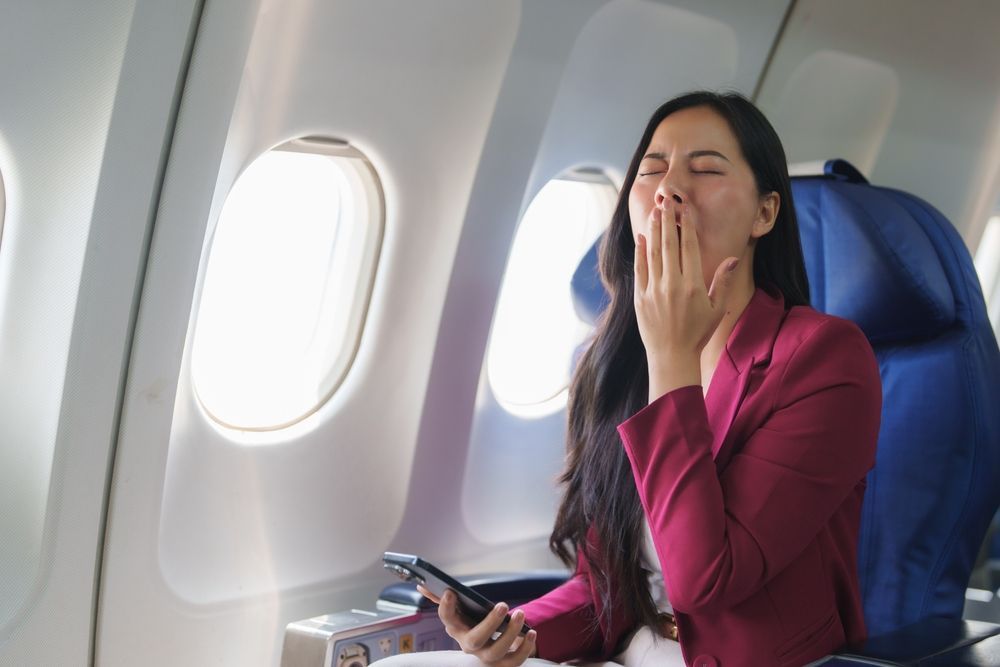
Which Sleep Aids Actually Help?
Sleep aids can be helpful for some travelers, but they are not the best solution for everyone. The right approach depends on your overall health, travel plans, and the severity of your symptoms.
Melatonin is one of the most widely studied supplements for jet lag and may help the body adjust to a new time zone when taken at the appropriate time. Prescription sleep medications may also be appropriate in certain situations, but because they can cause side effects, they should only be used under the guidance of a healthcare professional.
Alcohol, on the other hand, is not an effective sleep aid. Although it may initially cause drowsiness, it can reduce sleep quality, increase nighttime awakenings, and worsen dehydration during travel.
Why Recovery Looks Different for Everyone
There is no single timeline for recovering from jet lag. Some people adjust within a day or two, while others experience sleep disruption for nearly a week, particularly after crossing multiple time zones.
Recovery is influenced by factors such as age, overall health, sleep habits, the direction of travel, and the number of time zones crossed. People with existing sleep disorders, irregular work schedules, or chronic medical conditions may also take longer to adjust.
Because recovery varies from person to person, the most effective strategy is one that considers your individual health, travel schedule, and lifestyle rather than relying on a one-size-fits-all approach.

When Jet Lag Turns Into Ongoing Sleep Disruption
Jet lag typically improves as the body adjusts to a new time zone. However, if sleep problems persist for several weeks after returning home, or if they occur even when you are not traveling, another underlying issue may be contributing to your symptoms.
Persistent insomnia, excessive daytime fatigue, loud snoring, or difficulty staying asleep may be signs of an underlying sleep disorder or another medical condition that warrants evaluation. Identifying the cause is an important first step toward improving both sleep quality and overall health.
If sleep disruption becomes a recurring concern, discussing your symptoms with your primary care physician can help determine whether additional evaluation or treatment is appropriate.
Schedule a Preventive Health Consultation Today
Frequent travel and disrupted sleep can affect your overall health. If sleep problems persist beyond jet lag, a comprehensive evaluation may help identify underlying causes.
At
TruCare Concierge, Dr. Gabrielle Navon provides
personalized primary care with a focus on prevention, continuity, and individualized guidance. Through longer appointments and an ongoing physician relationship, patients receive thoughtful support for sleep concerns,
travel health, and other factors that can affect long-term wellness.
If you're looking for a more personalized approach to
preventive care,
schedule a consultation to learn more about
membership at TruCare Concierge.